516-212-2002



September 21, 2026
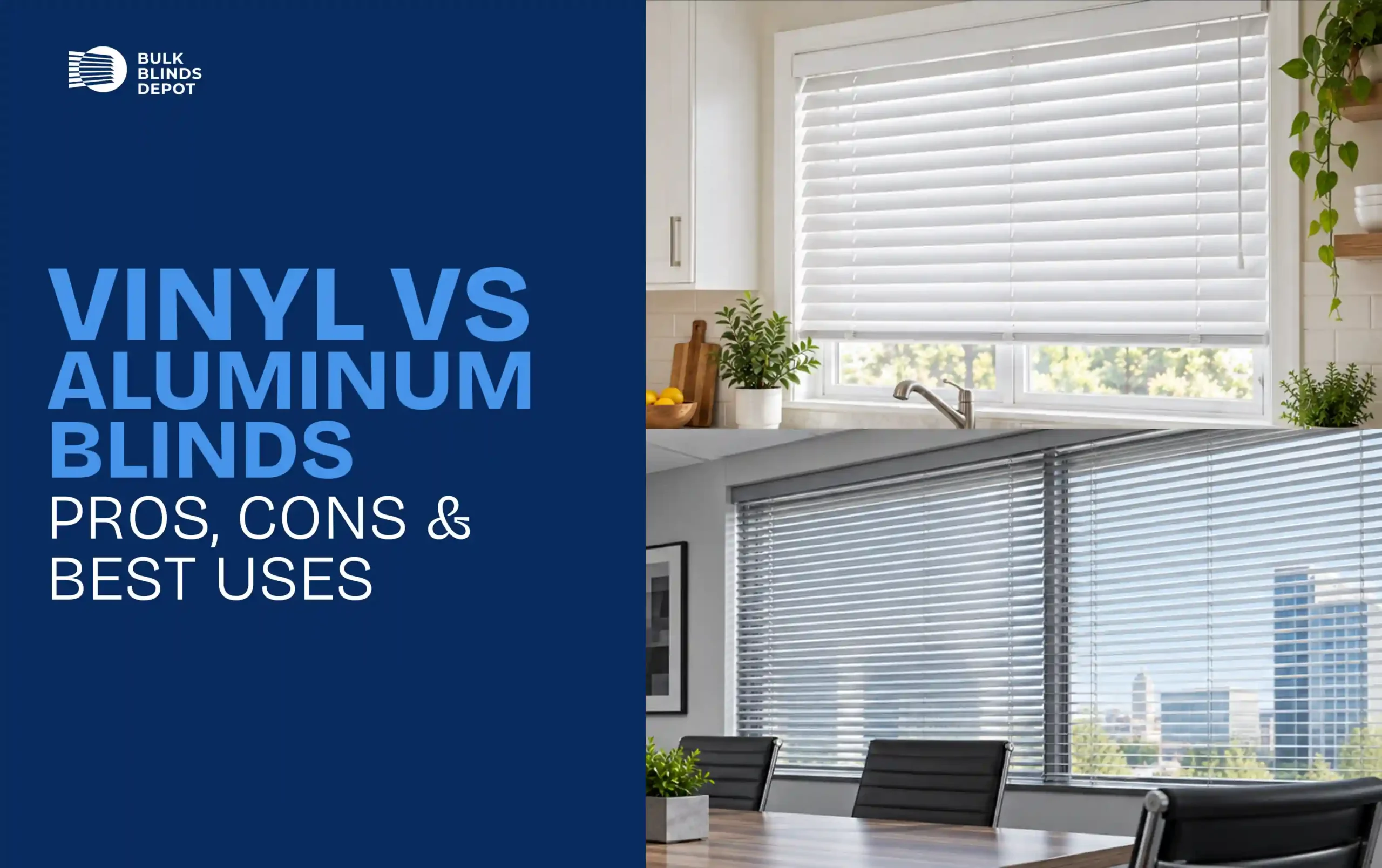
Aluminum vs Vinyl Blinds: Pros, Cons and More
TL:DR
Vinyl and aluminum blinds are both affordable, low-maintenance window treatments, but they suit different needs. Vinyl is generally more budget-friendly, moisture resistant, and quieter, making it a strong fit for bathrooms, bedrooms, and cost-conscious projects. Aluminum is stronger, resists warping, offers precise light control, and brings a sleek modern look, making it well-suited to bright rooms, contemporary interiors, and high-traffic commercial spaces. Neither is a universal winner, the right choice depends on the room, climate, and buyer’s priorities.
Aluminum blinds and vinyl blinds both play a significant role in decorating window spaces while providing functionality and efficiency, but many homeowners and commercial buyers struggle to decide which to choose. That confusion is valid between shades, drapes, shutters, and multiple blind materials, there are a lot of directions to go.
That said, when it comes to finding a window treatment solution for homes or commercial properties, blinds are generally the more practical option, since they offer better privacy, longevity, and light control than most alternatives. In this guide, we’ll compare aluminum vs. vinyl blinds, breaking down how the two stack up so you can decide which one fits your space.
Aluminum vs Vinyl Blinds: Quick Comparison
Both aluminum and vinyl blinds are popular, budget-friendly window treatment options, but they perform differently depending on where and how they’re used. Here’s a quick side-by-side comparison before we break down each factor in detail.
| Factor | Aluminum Blinds | Vinyl Blinds |
| Cost | Generally affordable, slightly higher than vinyl in some lines | Typically the most budget-friendly option |
| Durability | Slats can bend or dent with impact | More flexible and resistant to bending/denting |
| Moisture Resistance | Excellent, resists warping in humidity | Good, also holds up well in humid spaces |
| Sunlight Performance | Slats can get hot to the touch in direct sun | More stable but can warp under prolonged high heat |
| Maintenance | Easy to wipe clean, shows dust/fingerprints | Easy to wipe clean, low upkeep |
| Style | Sleek, modern, reflective finish | Wider range of colors/faux finishes, more casual look |
| Best Use | Kitchens, bathrooms, offices, modern spaces | Bedrooms, living rooms, budget-conscious projects |
At a glance, aluminum blinds lean toward moisture-heavy, high-traffic commercial or utility spaces, while vinyl blinds tend to suit cost-sensitive residential projects where a quieter, softer feel matters more.
The global window treatments market is projected to grow from $41.5 billion in 2021 to $52.1 billion by 2025.
What Are Vinyl and Aluminum Blinds?
Vinyl Blinds
Vinyl blinds are commonly made from PVC, a synthetic plastic material that’s lightweight and flexible. This makes them naturally resistant to moisture, so they hold up well in humid environments without warping or swelling. Vinyl blinds are generally among the more affordable window treatment options, and they come in a wide range of styles and finishes, including faux-wood looks that mimic the appearance of natural wood at a lower cost.
Aluminum Blinds
Aluminum blinds are made from thin, lightweight aluminum slats that offer a slim, modern appearance well-suited to contemporary spaces. They’re strong for their weight and resistant to warping, even in humid or high-temperature conditions, which makes them a reliable choice for spaces where vinyl or wood might struggle. Aluminum blinds also offer good light control thanks to their precise slat rotation. The main trade-off is that the slats can dent or bend if struck or handled roughly.
What Is the Difference Between Vinyl and Aluminum Blinds?
While both are practical, budget-friendly options, the difference between vinyl and aluminum blinds comes down to how they perform across a few key factors. Here’s a closer look at each.
1. Cost
Vinyl blinds are generally more affordable, making them a popular choice for budget-conscious projects. Aluminum blinds may cost slightly more depending on quality, finish, slat size, and any customization. Exact pricing varies by seller and product line, so it’s worth checking current listings for an accurate comparison.
2. Durability
Aluminum is strong for its weight and holds its shape well over time, though the slats can dent or crease if struck or handled roughly. Vinyl is more flexible and less prone to denting, but it may warp, discolor, or become brittle with prolonged heat or UV exposure.
3. Moisture Resistance
Vinyl performs well in humid areas like bathrooms and kitchens, holding up without warping or swelling. Aluminum is also moisture tolerant, though its long-term performance can depend on the finish and the specific environment it’s installed in.
4. Light and Heat Control
Both materials let you adjust light levels by tilting the slats to your preference. Aluminum can reflect sunlight effectively, which some users find helpful in bright rooms. Neither material is universally more energy efficient than the other.
5. Cleaning and Maintenance
Both vinyl and aluminum blinds are relatively easy to maintain. Regular dusting and the occasional damp-cloth wipe-down are usually enough to keep them looking clean. With either material, it’s best to avoid harsh or abrasive cleaners that could damage the finish.
6. Style and Appearance
Vinyl blinds are available in a range of colors and textured finishes, including options that mimic wood or other materials. Aluminum blinds generally offer a slimmer, cleaner look that suits modern spaces. Available colors and finishes vary by manufacturer, so it’s worth browsing current options to see what fits your space.
7. Noise
Vinyl blinds tend to be quieter overall. Aluminum slats are more prone to rattling when exposed to airflow from fans, HVAC systems, or open windows.
Pros and Cons of Vinyl Blinds
Pros
- Affordable: one of the most budget-friendly window treatment options available
- Moisture-resistant: holds up well in humid spaces like bathrooms and kitchens
- Lightweight: easy to handle during installation and adjustment
- Flexible: resists denting or creasing from everyday impact
- Easy to clean: regular dusting and a damp cloth are usually enough
- Quiet during operation: less prone to rattling from airflow than aluminum
Cons
- May warp under excessive heat: prolonged exposure to high temperatures can affect slat shape
- Can discolor from prolonged sunlight: extended UV exposure may fade or yellow the material over time
- May become brittle over time: especially with sustained heat or sun exposure
- Less structurally rigid than aluminum: doesn’t hold its shape under pressure quite as well
Pros and Cons of Aluminum Blinds
Pros
- Strong and lightweight: durable without adding bulk to the window
- Resistant to warping: holds its shape well even in humid or high-temperature conditions
- Good light control: precise slat tilt makes it easy to fine-tune brightness
- Reflects sunlight: can help bounce light away in bright rooms
- Modern appearance: slim, clean profile that suits contemporary spaces
- Suitable for frequently used windows: handles regular adjustment well over time
Cons
- Can dent or crease: slats are vulnerable to impact or rough handling
- May rattle in moving air: exposure to fans, HVAC systems, or open windows can cause noise
- Some finishes may show fingerprints or water marks: depending on the specific finish
- Usually costs more than basic vinyl blinds: pricing varies by quality, finish, and customization
Vinyl vs Aluminum Blinds for Different Rooms
1. Bathrooms and Laundry Rooms
Vinyl is generally a practical option for these spaces because of its moisture resistance. It holds up well against the humidity and splashing common in bathrooms and laundry areas without warping or swelling over time.
2. Kitchens
Both materials can work well in a kitchen, depending on the specific window and its exposure. Vinyl suits moisture-heavy spaces near sinks or dishwashers, while aluminum can be a useful choice for windows that receive strong, direct sunlight throughout the day.
3. Bedrooms
In bedrooms, it’s worth considering vinyl where quieter operation matters, since it’s less prone to rattling from airflow than aluminum. Beyond noise, think about privacy and light control needs. Both materials allow slat adjustment for filtering light, but the right choice often comes down to how much you value a quiet, undisturbed space versus other factors like style or budget.
4. Living Rooms and Home Offices
Aluminum tends to work well in living rooms and home offices with modern interiors and bright windows, thanks to its slim profile and reflective finish. Vinyl may suit more budget-focused or casual spaces where a softer look and lower cost are priorities.
5. Commercial or High-Traffic Spaces
In commercial settings or high-traffic areas, aluminum may be preferable when frequent operation and structural strength are priorities, as it withstands repeated use over time.
Conclusion
When it comes down to it, choosing between vinyl and aluminum blinds isn’t about which material is “better” overall. It’s about which one best fits your space and priorities. Vinyl generally favors affordability, moisture resistance, and flexibility, making it a practical choice for humid rooms. Aluminum, on the other hand, generally favors strength, sunlight control, and a slim, modern appearance.
Neither option is a universal winner, the right choice depends on the room, the climate, your maintenance preferences, and the overall look you’re going for.
Not sure which is right for your space? Browse aluminum and vinyl blinds at Bulk Blinds and get quality options for every room at bulk pricing.
FAQs
Which is better, aluminum or vinyl blinds?
Neither is universally better, it depends on your priorities. Vinyl is generally more affordable, moisture resistant, and quieter, while aluminum offers more strength, sunlight control, and a modern look. The right choice depends on the room and what matters most to you.
Are aluminum blinds more durable than vinyl blinds?
It depends on the type of wear. Aluminum holds its shape well and resists warping, but the slats can dent or crease from impact. Vinyl is more flexible and resistant to denting, but it can become brittle or discolored with prolonged heat and UV exposure.
Are vinyl or aluminum blinds better for bathrooms?
Vinyl is generally the more practical choice for bathrooms due to its strong moisture resistance, which helps it hold up against humidity without warping over time.
Are aluminum or vinyl blinds better for keeping heat out?
Both allow light and heat control through slat adjustment, and aluminum’s reflective surface can help bounce sunlight away in bright rooms. Neither material is universally more effective at heat control, actual performance depends on the specific product and installation.
Follow Us:



Kevin Salazar
Founder & Window Treatment Specialist
Kevin is a window treatment specialist with extensive experience in commercial offices, government facilities, schools, and homes. From solar shades to blackout roller shades, he’s helped hundreds of clients choose, measure, and install the right products for their space. He is the founder of Bulk Blinds Depot; his mission is simple: to make buying window treatments easy and efficient at hard-to-beat prices.