516-212-2002



September 22, 2026
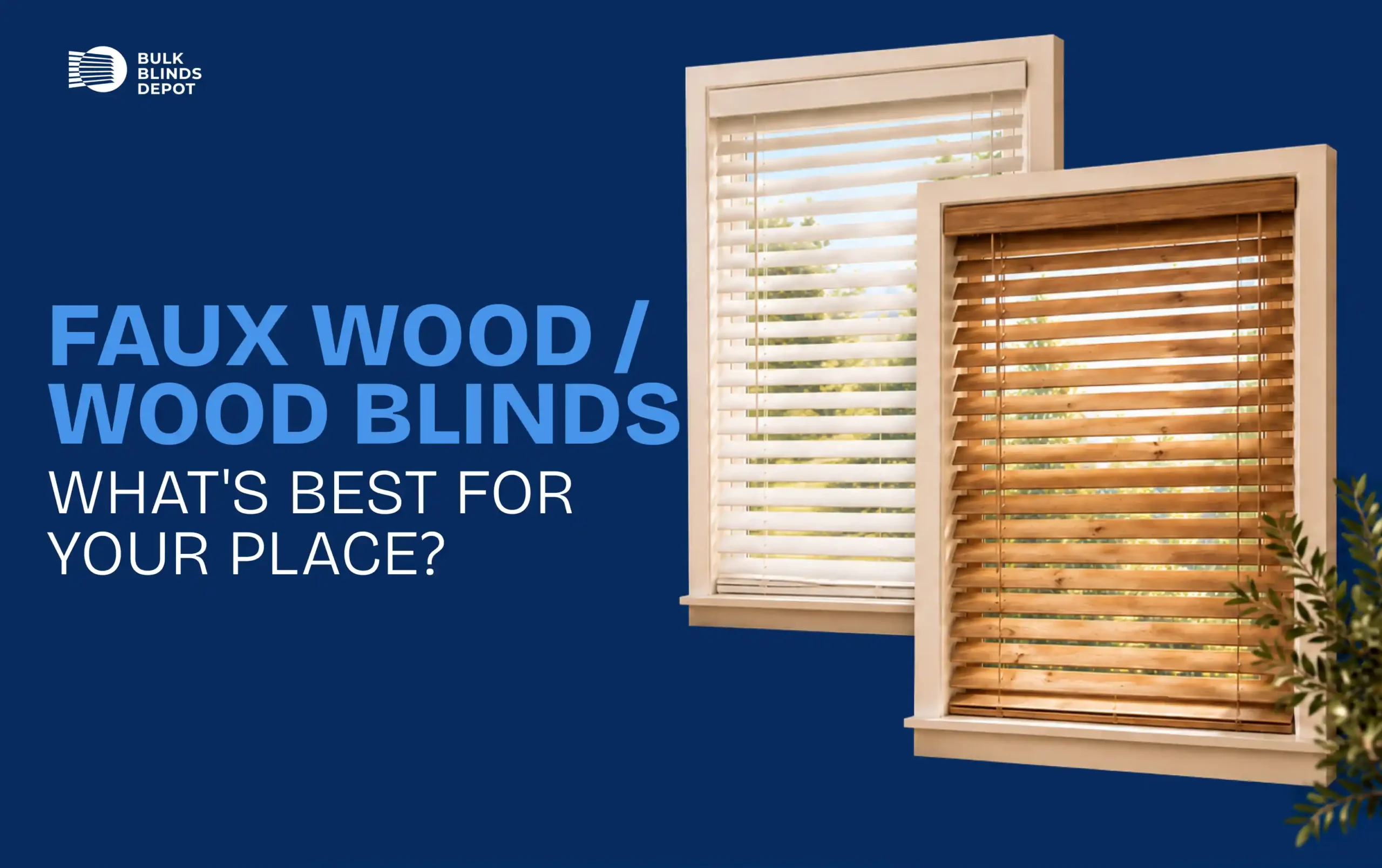
Faux Wood Blinds vs Wood Blinds: What’s Best for Your Place?
TL:DR
Faux wood and real wood blinds look similar at a glance but perform very differently. Faux wood resists humidity, costs less, and needs almost no upkeep, making it the better fit for bathrooms, kitchens and high-traffic spaces. Real wood is lighter, better insulated, and can be restained over time, making it worth the extra cost for dry, design-focused rooms like living rooms and bedrooms. The right choice comes down to the room, not just the look.
Shopping for window treatments and can’t decide between faux wood and real wood blinds? You’re not alone. In the faux wood blinds vs wood blinds debate, the big question is usually whether faux wood can actually match the real thing’s look, or whether it’ll feel noticeably different once it’s up. Can real wood handle a humid bathroom or a sun-drenched living room without warping, cracking, or fading? And if you’re outfitting an office, hotel, or rental property, how do you choose a material that looks premium in every unit without blowing your budget or waiting weeks for a bulk order to ship?
These are the questions homeowners and commercial buyers ask every day, and the honest answer is: it depends on where the blinds are going and how they’ll be used. In this guide, we’ll discuss faux wood blinds vs. wood blinds, comparing looks, durability, moisture resistance, and cost so you can pick the right one for your space.
Real Wood Blinds vs Faux Wood Blinds: How They Actually Compare
| Consideration | Faux Wood Blinds | Wood Blinds | Bottom Line |
| Humidity & moisture | Built to handle high humidity without the warping issues that wood faces | Absorbs moisture, so manufacturers advise against installing it in high-humidity rooms | Faux wood is the safer pick for bathrooms, kitchens, and laundry rooms |
| Weight & ease of lifting | Heavier than real wood, which can strain hardware on large or frequently raised windows | Noticeably lighter, which keeps mounting brackets and lift mechanisms working smoothly for longer | Wood blind is the better fit for wide or tall windows you’ll raise often |
| Insulation | Offers some coverage, but doesn’t regulate temperature as effectively | Absorbs heat and cold more readily, which can help regulate room temperature and may lower utility costs | Wood blinds have a practical edge if energy efficiency matters to the buyer |
| Cleaning & upkeep | Can be wiped with standard household cleaners or even hosed off since it’s essentially high-grade plastic | Needs regular dry dusting, damp cleaning has to be more careful to avoid damage | Faux wood is the lower-maintenance option for day to day use |
| Color flexibility | Comes in a fixed set of factory colors, can’t be re-stained if preferences change | Can be re-stained or refinished to match evolving decor or furniture | Wood ages with a room better, faux wood is locked in at purchase |
| Cost | Generally more budget-friendly, especially for large or multi-window projects | Carries a premium price tag reflecting the natural material | Faux wood comes as better option for bigger orders or tighter budgets |
| Best-fit rooms | High-humidity spaces, kids/pet households, multi-unit or commercial properties | Living rooms, bedrooms, offices, and other dry, design-focused spaces | Can’t label one blind, so match the material to the room’s moisture level and use, not just looks |
Real Wood Blinds Vs Faux Wood Blinds: Quick Overview
What Are Faux Wood Blinds?
Faux wood blinds are designed to mimic the look of real wood but are built from synthetic materials such as vinyl, PVC, or composite blends. Some versions, often called composite blinds, even use a real wood core wrapped in a protective coating for extra strength. The goal is the warm, natural appearance of wood without wood’s sensitivity to moisture and temperature swings.
According to Worldmetrics, Faux wood is the most preferred material among 35- 44-year olds
What Are Real Wood Blinds?
Real wood blinds are made from genuine hardwood, commonly basswood, bamboo, or oak. Because they’re cut from natural timber, each slat carries authentic grain, texture, and color variation and can be stained or refinished to match a room’s existing wood tones and furniture. That’s why wood blinds are preferred by 40% of luxury homeowners.
Faux Wood vs Real Wood Blinds: 9 Differences You Need to Know
1. Appearance, Grain and Home Decor
At a glance, the two are hard to tell apart both use the same slat structure and can look nearly identical from across a room.
Look closer, though, and the difference shows: real wood carries natural grain, texture, and color variation that’s visible up close, especially in a natural finish, while faux wood is manufactured with inspired grain patterns designed to imitate that look. Faux wood also tends to come in a narrower range of factory finishes, mostly whites and painted tones while real wood can be stained to match existing floors, trim, or furniture.
2. Moisture, Humidity, Warping and Cracking
This is where the two materials diverge most. Faux wood handles high humidity and moisture well, while real wood is made from a water-absorbing natural material and generally shouldn’t be installed in high-humidity rooms.
Faux wood resists warping and fading from humidity exposure, making it the go-to for bathrooms, kitchens, and laundry rooms, while real wood is better suited to dry, climate-stable spaces.
3. Weight and Wide-Window Suitability
Faux wood blinds are typically heavier than real wood, and that extra weight can become a real issue on large windows, especially ones you lift often.
Real wood’s lighter weight also puts less strain on mounting brackets and lift mechanisms, helping hardware last longer and operate more smoothly over time. For wide or tall windows that get raised and lowered frequently, real wood is generally the more practical choice.
4. Durability and Everyday Wear
In terms of comparing faux wood blinds vs wood blinds durability, both materials are considered sturdy. Faux wood has an edge in households with kids or pets, since it’s less prone to scratching, denting, or moisture damage from daily handling. Real wood holds up well in stable, dry conditions but is more vulnerable to movement, cracking, or warping if humidity or temperature swings.
5. Cleaning and Maintenance
When it comes to the maintenance factor for faux wood blinds vs. wood blinds, faux wood is the lower-effort option. It can typically be wiped down with standard household cleaners, a damp cloth, or even rinsed off if needed since it’s essentially high-grade plastic.
On the other hand, real wood blinds require more careful upkeep: regular dry dusting or vacuuming, with moisture-based cleaning approached cautiously to avoid damaging the finish.
6. Cost and Long-Term Value
Faux wood is generally the more budget-friendly option, offering a similar look to real wood at a lower price point which makes it appealing for outfitting multiple windows or an entire property at once.
Real wood carries a premium price tag reflecting the cost of natural material, but it can be restained or refinished over time, which extends its usable life and adapts it to changing decor rather than needing full replacement.
7. Insulation and Energy Efficiency
Real wood has a natural advantage here. Wood absorbs heat and cold more readily than faux wood, helping regulate indoor temperature and potentially lowering utility costs. Faux wood provides some coverage and light blocking but doesn’t perform the same insulating role, making real wood the stronger pick where energy efficiency is a priority.
According to statistics, 65% of consumers prioritize energy efficiency when choosing window treatments
8. Light Control and Privacy
Both blind types use the same adjustable horizontal slat mechanism, so light control and privacy performance are essentially identical between the two. The choice here comes down to material preference rather than function because neither offers a meaningful advantage over the other for filtering light or blocking sightlines.
9. UV Exposure and Finish Aging
Faux wood is often built with UV inhibitors that help it resist cracking, chipping, peeling, or yellowing over time, making it a reliable choice for sun-facing windows. Real wood can develop an aged character over time in some cases, but its finish and stain are more likely to shift in color or tone with prolonged direct sun exposure, so placement relative to sunlight is worth considering in the decision.
Faux Wood Blinds or Real Wood? Best Choice by Place
- Bathroom: Faux wood is the clear choice. Between shower steam and everyday humidity, real wood is likely to warp, crack, or discolor over time.
- Kitchen: Faux wood again. Between cooking steam, sink splashes, and grease, a kitchen sees more moisture and mess than almost any other room in the house. Faux wood’s damp-cloth cleaning and moisture resistance make it far more practical here than real wood, which needs to stay dry to avoid warping.
- Living Room: Real wood tends to be the better fit. Living rooms are usually dry, climate-stable, and design-focused, exactly where real wood’s authentic grain, richer finish options, and natural insulation add the most value. If the living room sees direct, prolonged sun exposure, faux wood is worth considering instead to avoid finish fading.
- Bedroom: Either works well, since bedrooms are typically dry and low-moisture. Real wood is the stronger pick if a warm, high-end look and insulation matter most. Faux wood is the practical choice for kids’ rooms or nurseries, where easy cleaning and durability against scuffs and handling win out.
- Dining Room/Home Office: Real wood suits these spaces well. Both are typically dry, low-traffic in terms of handling, and benefit from a polished look. A home office, in particular, can benefit from real wood’s better insulation if it’s a room used for long stretches of the day.
- Rental and High-Turnover Properties: Faux wood is the practical standard here. It’s more budget-friendly across bulk orders, holds up better to inconsistent tenant care, resists moisture issues in units you can’t monitor closely, and doesn’t require refinishing between tenants.
Faux Wood Blinds vs Wood Blinds: Pros and Cons
| Pros | Cons | |
| Faux Wood Blinds | Resists humidity and moisture damage, low-maintenance, wipe-clean care, more budget-friendly especially in bulk | Heavier, which can strain hardware on wide windows. can sag in high heat/direct sun, limited color options, can’t be re-stained |
| Real Wood Blinds | Authentic grain and warmth, lighter weight, easier on hardware, can be re-stained or refinished over time, better natural insulation | Vulnerable to warping, cracking, or mold in humid rooms, higher price tag, more careful cleaning required |
Key Takeaway
Choosing between faux wood and real wood blinds is about finding which best matches the room’s style, needs and interior. Faux wood is the practical, low-maintenance pick for bathrooms, kitchens, and high-traffic spaces where moisture and durability matter most. Real wood is worth the investment in dry, design-focused rooms like living rooms and bedrooms, where its authentic grain, natural insulation, and long-term refinishing options add real value.
Still not sure which one fits your space? Our full collection of faux wood and real wood blinds and consultation with our window treatment specialists will help you pick the right fit for every room in your commercial property or home.
Frequently Asked Questions
What is the main difference between real wood and faux wood blinds?
The main difference comes down to material: real wood blinds are made from genuine hardwood, while faux wood blinds are made from synthetic materials like PVC, vinyl, or composite blends. That difference in material drives nearly every other difference between them, including moisture resistance, weight, cost, and maintenance.
Are faux wood blinds better than wood blinds?
It depends on the room and priorities. Faux wood tends to be the more practical choice in humid or high-traffic spaces, since it resists moisture, holds up to daily wear, costs less, and requires less maintenance. Real wood pulls ahead in dry, design-forward spaces where authentic grain, lighter weight, and natural insulation matter more than practicality.
Which lasts longer, faux wood or real wood blinds?
It depends on the room. In humid or high-traffic spaces, faux wood typically lasts longer since it resists warping, cracking, and moisture damage. In dry, stable environments, real wood can last just as long, and since it can be re-stained or refinished, it can also be restored rather than replaced as it ages.
Faux wood blinds vs wood blinds cost: which is cheaper?
Faux wood blinds are generally the more affordable option, often costing significantly less than real wood, especially for bulk or whole-home orders. Real wood carries a premium price tag that reflects the cost of natural material, though high-end faux wood can sometimes approach real wood pricing depending on the finish and brand.
Which is better for bathrooms, faux wood or wood blinds?
Faux wood is the better choice for bathrooms. It resists the humidity, steam, and moisture that can cause real wood to warp, crack, or develop mold over time.
Which is easier to clean, faux wood or real wood blinds?
Faux wood is easier to clean. It typically tolerates a damp cloth or standard household cleaners, while real wood needs regular dry dusting and more careful handling to avoid moisture damage.
Which gives better privacy: faux wood or real wood blinds?
Neither has an advantage here. Both use the same adjustable horizontal slat design, so light control and privacy performance are essentially identical between the two.
Follow Us:



Kevin Salazar
Founder & Window Treatment Specialist
Kevin is a window treatment specialist with extensive experience in commercial offices, government facilities, schools, and homes. From solar shades to blackout roller shades, he’s helped hundreds of clients choose, measure, and install the right products for their space. He is the founder of Bulk Blinds Depot; his mission is simple: to make buying window treatments easy and efficient at hard-to-beat prices.