516-212-2002



October 22, 2026
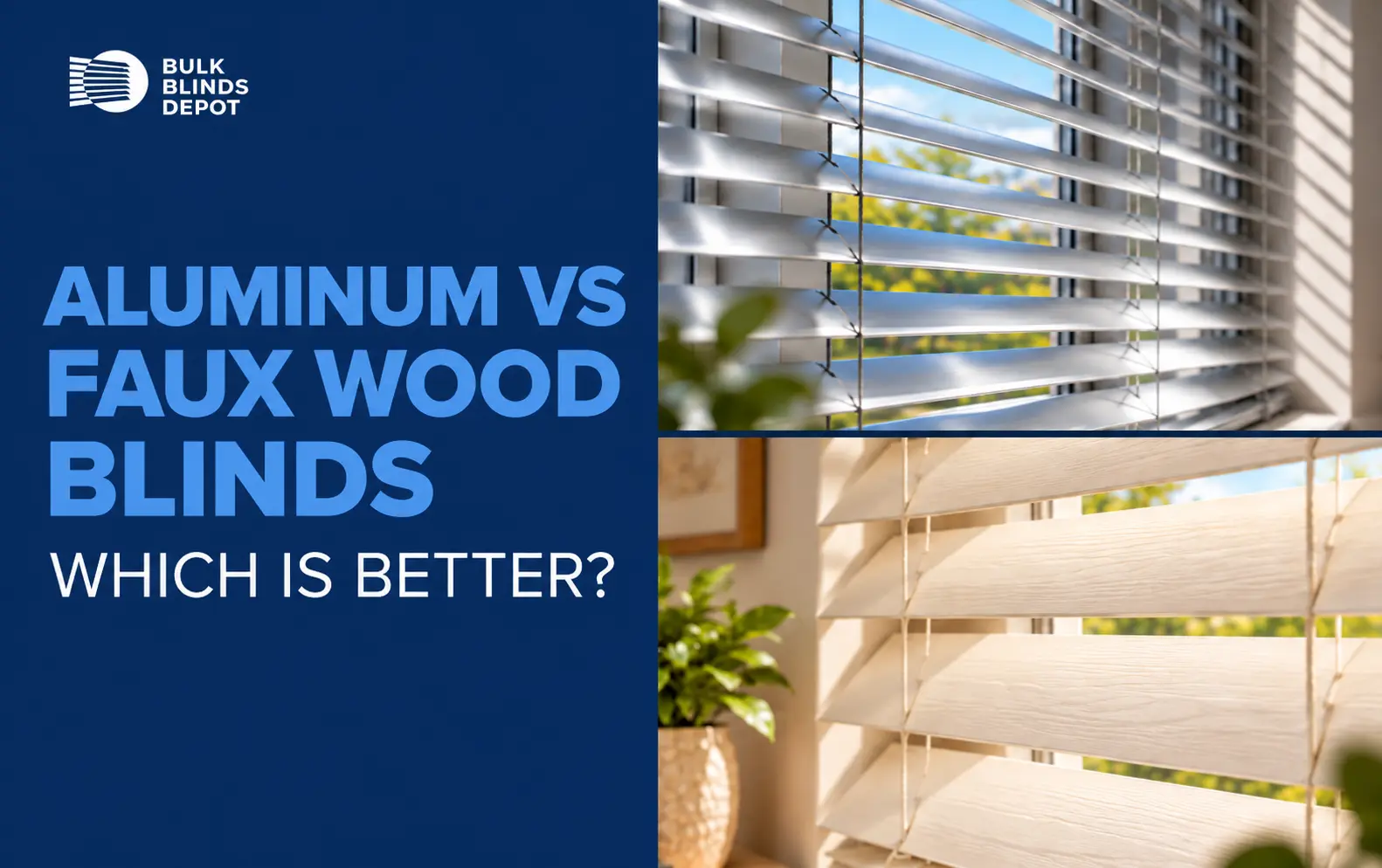
Faux Wood vs. Aluminum Blinds: Which Is Better?
TLDR:
Faux wood vs aluminum blinds comes down to a core trade-off. Faux wood is thicker, warmer, and heavier, with better resistance to dents, making it a good fit for living rooms and bedrooms. Aluminum is slimmer, lighter, and usually more economical, which suits offices, rentals, and wide or frequently operated windows. Both handle humid rooms when the product is built for it, so check exact specifications for your window.
Standing in front of a wall of blind samples, trying to decide between aluminum and faux wood, it’s easy to assume one is just the budget option and the other the nicer one, but that’s not really where the difference lies. The real question in the faux wood vs aluminum blinds decision comes down to a trade-off most shoppers don’t think about until they’re already installing: faux wood gives you a thicker, warmer, more substantial-looking slat, while aluminum gives you a lighter, slimmer, more economical profile that’s easier to operate on wider windows.
Both materials resist moisture reasonably well, but they fail in different ways over time, and both come with real trade-offs in weight, durability, and cost that matter more depending on the room and how often the blind gets used.
In this guide, we’ll compare faux wood and aluminum blinds across various factors so you can figure out which one actually fits your space rather than which one sounds better on paper.
According to statistics, Faux wood is the most preferred material among 35-44 year olds.
Faux Wood vs Aluminum Blinds at a Glance
| Factor | Faux Wood Blinds | Aluminum Blinds |
| Material | PVC/composite designed to resemble wood | Lightweight aluminum slats |
| Appearance | Warm, thicker, wood-like | Slim, clean, modern/minimal |
| Weight | Heavier | Lighter |
| Moisture | Generally moisture-resistant; verify product limits | Does not absorb moisture, finish/corrosion resistance is product-dependent |
| Physical damage | Less likely to dent, quality varies | Thin slats can bend or dent if handled roughly |
| Light/privacy | Thicker/wider slats can give substantial closure | Precise tilt, performance depends on slat size and fit |
| Cleaning | Dust/wipe with damp cloth per care guidance | Dust/wipe gently, avoid bending slats |
| Cost/value | Usually higher upfront | Usually more budget-friendly |
| Best fit | Homes, bedrooms, living areas, humid rooms | Offices, rentals, narrow windows, multi-window projects |
Aluminum Blinds Vs. Faux Wood Blinds: Key Differences
1-Durability and Everyday Handling
Faux wood has a thicker, more substantial build and is generally less prone to permanent dents from light contact. Aluminum holds up well in normal use, but its thin slats can crease, bend, or dent if handled roughly. Neither material has a universal edge, since durability also depends on slat gauge and material quality, window size, traffic, and how the blind is handled day to day.
Verdict: Faux wood tolerates bumps better, while aluminum is fine where handling is gentle. Product quality matters more than material alone.
2-Moisture Resistance and Humid Rooms
Both materials are commonly considered for kitchens, bathrooms, and other humid areas because neither behaves like untreated real wood. Faux wood is moisture-resistant, though that doesn’t mean every composite is waterproof, so it’s worth checking product limits. Aluminum doesn’t absorb water, but its finish and corrosion resistance should be checked against manufacturer specifications.
Verdict: Either can work in humid rooms. Construction and finish matter more than a blanket material claim.
3-Weight, Window Size and Ease of Operation
This is where the two differ most. Faux wood is heavier, while aluminum is notably lighter. On wide windows, that weight affects how much effort it takes to lift the blind, how much load the mounting hardware carries, and how easy daily operation feels, especially on windows raised and lowered often. Product width limits vary, so check sizing for your specific blind, and consider splitting a very wide opening into multiple blinds where manufacturer guidance recommends it.
Verdict: Aluminum has the edge on wide or frequently operated windows. Faux wood is a better fit for standard-sized windows where weight is less of a factor.
4-Light Control, Privacy and Insulation
Both use tilting slats for adjustable light and privacy. Faux wood’s thicker, wider slats can create a more substantial visual barrier when closed, while aluminum’s narrower slats allow finer tilt adjustment. Neither creates blackout conditions on its own, since fit, slat overlap, route holes, and side gaps all affect light leakage. Insulation claims also vary by product, so check verified product data before making energy-related decisions.
Verdict: Light and privacy performance is close, and comes down more to slat size and fit than material.
5-Cleaning and Maintenance
Both are low-maintenance. Routine dusting, plus a lightly damp cloth where appropriate, is usually enough. With aluminum, avoid aggressive wiping that can bend the thin slats. With faux wood, avoid soaking the blind or using harsh cleaners unless the product’s care guidance specifically allows it.
Verdict: Both are easy to maintain. Each just needs a slightly different kind of care.
6-Appearance and Style
Faux wood has a warmer, thicker, more furniture-like look that suits living rooms, bedrooms, and traditional or transitional interiors. Aluminum has a slimmer, cleaner, more utilitarian profile that often fits offices, rentals, laundry rooms, and commercial spaces. Neither is universally more premium, since it comes down to the look the space calls for.
Verdict: Style is subjective. Choose the profile that fits the room.
7-Cost and Long-Term Value
Aluminum is generally the lower upfront-cost option, while faux wood usually costs more because of its thicker construction and decorative finish. Value depends on the application. Low upfront cost and lightweight repeatability can favor aluminum, while a more substantial appearance and better resistance to bending can justify faux wood in other rooms.
Verdict: Aluminum often wins on upfront budget, while faux wood can earn its higher price where appearance and impact resistance matter.
Faux Wood vs. Aluminum Blinds: For Different Rooms and Uses?
- Living room / bedroom: Faux wood is often the better fit when appearance, privacy, and a more substantial look matter most.
- Kitchen / bathroom: Either can work if the specific product is rated for the environment. Compare moisture guidance, cleaning needs, and style before deciding.
- Commercial office: Aluminum is a practical starting point where a slim profile, light weight, and budget are the priorities.
- Rental property: Aluminum can simplify budget and replacement planning, while faux wood may be preferred where appearance and perceived finish matter more.
- Wide windows: Compare size limits and lift weight for each product first. A more substantial look isn’t a reason on its own to default to faux wood, since its added weight can make wide blinds harder to operate.
Which Should You Choose: Aluminum or Faux Wood Blinds?
There’s no single winner here, so the right pick comes down to what matters most for the window in question:
- Choose faux wood if you prioritize a wood-like appearance, thicker slats, stronger resistance to dents, and a more substantial residential look.
- Choose aluminum if you prioritize lighter weight, easy operation, a slim modern profile, lower upfront cost, or repeat installations across offices and rentals.
- Check the exact product specification, not just the material, when the window is very wide, frequently used, or exposed to high humidity, since construction and sizing limits can matter more than the material label alone.
Key Takeaway
The faux wood vs aluminum blinds decision comes down to one core trade-off: faux wood is thicker, warmer, and heavier, while aluminum is slimmer, lighter, and usually more economical. Neither is the better choice across the board. The right one depends on the window’s size, how often the blind gets used, the room it’s going in, and the look you want. Both can handle humid rooms and everyday use when the specific product is built for it, so the exact specifications matter as much as the material.
Compare Bulk Blinds products and pricing against your actual window or project to see which fits best.
Frequently Asked Questions
What are the disadvantages of aluminum blinds?
The main downside is that thin aluminum slats can bend, crease, or dent if handled roughly. Their slim profile also looks less substantial than thicker faux wood slats, which matters if you want a warmer, furniture-like look. Finish and corrosion resistance vary by product, so check manufacturer specifications for humid or high-use spaces.
Are faux wood blinds heavier than aluminum blinds?
Yes. In aluminum blinds vs wood blinds comparisons, it helps to know that faux wood is a PVC or composite alternative, not real hardwood, and its thicker build makes it heavier than lightweight aluminum. That extra weight matters most on wide windows and blinds you raise and lower often.
Which blinds are better for bathrooms: faux wood or aluminum?
Either can work, as long as the specific product suits the environment. Faux wood is generally moisture-resistant, and aluminum doesn’t absorb water, though its finish and corrosion resistance should follow manufacturer specifications.
Do faux wood blinds last longer than aluminum blinds?
Not necessarily. Each material fails differently: faux wood resists dents but is heavier, while aluminum is lighter but its thin slats can bend under rough handling. Lifespan depends more on product quality and usage frequency than on the material label.
Are aluminum blinds still in style?
Yes. In the wood blinds vs metal blinds debate, style comes down to the look you want. Aluminum’s slim, clean profile suits modern interiors and utility spaces, while wood-look blinds lean toward a warmer, more traditional look. Neither is universally more current or more premium.
Which is better for large windows: aluminum or faux wood blinds?
Check the product’s size limits and lift weight first. Aluminum is lighter and easier to raise, which helps on wide or frequently operated windows, while faux wood is heavier and can be harder to operate at larger sizes. For very wide openings, the manufacturer may recommend splitting into multiple blinds.
Follow Us:



Kevin Salazar
Founder & Window Treatment Specialist
Kevin is a window treatment specialist with extensive experience in commercial offices, government facilities, schools, and homes. From solar shades to blackout roller shades, he’s helped hundreds of clients choose, measure, and install the right products for their space. He is the founder of Bulk Blinds Depot; his mission is simple: to make buying window treatments easy and efficient at hard-to-beat prices.