516-212-2002



October 21, 2026
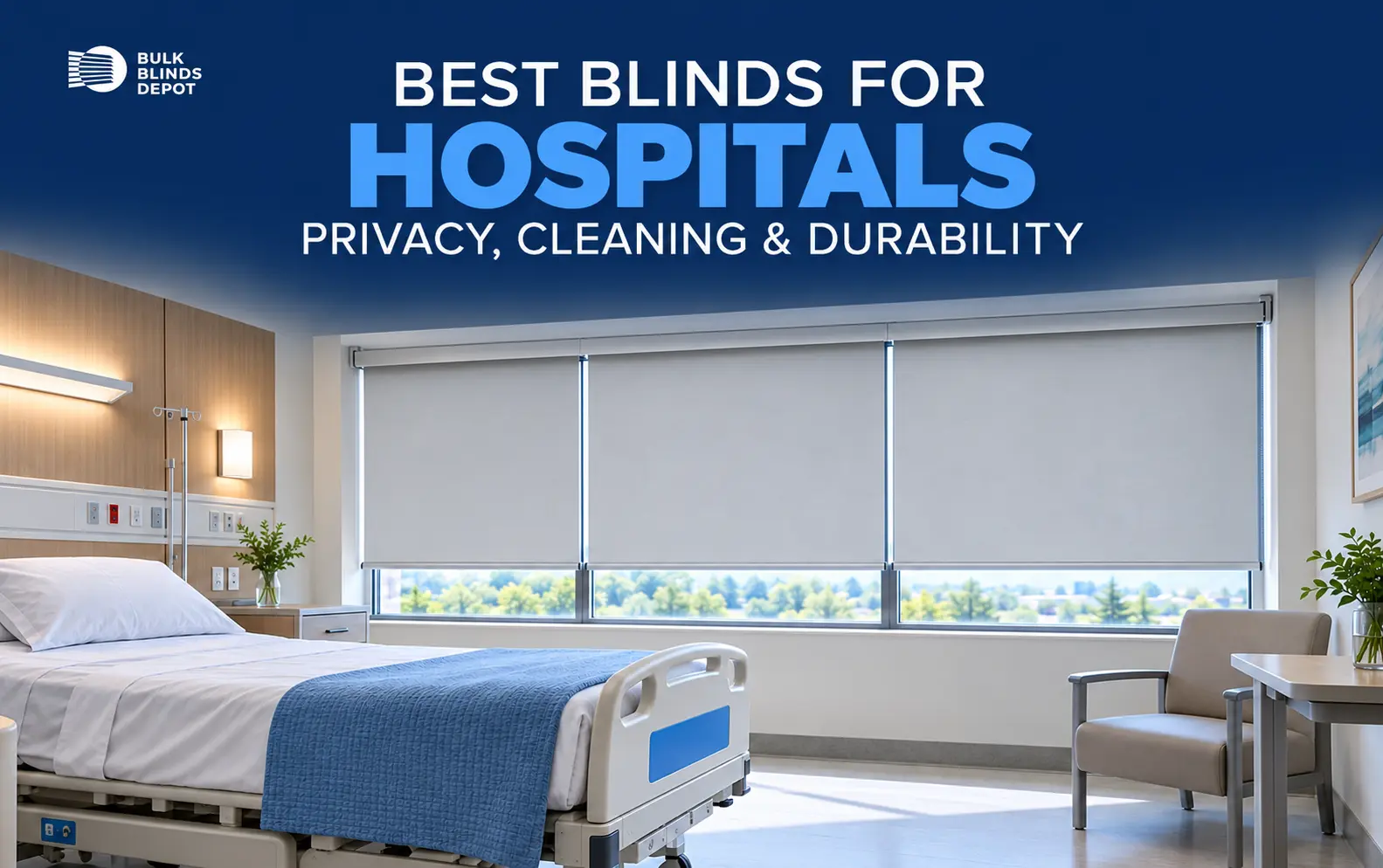
Best Blinds for Hospitals: Privacy, Cleaning & Durability
TLDR:
The best blinds for hospitals depend on the room, not a single universal product. Roller shades suit patient and exam rooms for easy cleaning and adjustable privacy, solar or light-filtering shades work well in waiting areas, aluminum blinds fit offices and consultation rooms, and integral blinds serve specialized spaces like ICUs. Facility managers should verify cleaning compatibility, privacy needs, and project-specific compliance requirements before ordering at scale.
Walk into a patient room at 2 a.m., and the last thing anyone wants is a blind that rattles when the nurse checks in, or a curtain track jammed halfway across the window because it hasn’t been cleaned in months. Blinds for hospitals face a different set of demands than almost any other setting, they need to protect patient privacy on command, survive constant sanitation between patients, hold up to daily handling from staff and visitors, and still let in enough natural light to keep a room from feeling clinical and closed off.
In this guide, we’ll compare the blind types best suited to hospital environments, based on how easily they clean and sanitize, how reliably they protect privacy, how well they hold up under heavy daily use, how much light control they offer, how they operate, and which rooms or applications each one fits best.
What Hospitals Need From Window Blinds
Before comparing specific hospital blinds, it helps to set the criteria hospitals actually need to evaluate against.
1-Privacy
Privacy needs shift by room type. Patient rooms and exam rooms need reliable visual privacy on demand, while waiting areas and common spaces prioritize daylight and openness over full closure.
2-Cleaning
Blinds in a hospital setting need to hold up to whatever cleaning and sanitation protocol the facility follows. Look for surfaces and constructions that support routine cleaning per manufacturer guidance and your facility’s own infection-control standards, rather than assuming any product is compatible with a specific disinfectant.
3-Durability
Hospital blinds see far more daily operation, cleaning, and contact than a typical residential blind, so durability needs to account for frequent handling and a realistic replacement cycle in a commercial setting.
4-Light and Glare Control
Different spaces need different levels of light filtering. Consultation and patient rooms may need the option for full privacy and reduced light, workstations need glare control without losing usable light, and waiting areas typically benefit from a brighter, more open feel.
5-Operation and Accessibility
Cordless or motorized options can reduce visible cords and physical contact points, and can help with windows that are hard to reach as part of any broader healthcare window treatments plan. Specific safety or compliance claims should be confirmed against the manufacturer’s own certifications rather than assumed.
Comparison of Best Blinds for Hospitals
| Type | Strongest Fit | Privacy / Light | Cleaning | Main Limitation |
| Roller shades | Exam rooms, patient rooms, offices | Light-filtering to blackout | Flat surface, fabric dependent | Fabric must be verified for cleaning method |
| Vinyl / vertical blinds | Large windows, general-use areas | Adjustable slats | Moisture-resistant materials can be practical | Slats still require individual cleaning |
| Aluminum blinds | Offices, admin areas | Precise tilt control | Non-porous slats are wipeable | Thin slats can bend or dent with rough handling |
| Blackout roller shades | Recovery, exam, on-call rooms | High privacy + room darkening | Simple construction | Removes daylight/view when fully lowered |
| Solar shades | Waiting rooms, lobbies | Glare reduction + daylight | Fabric dependent | Not a full nighttime-privacy solution |
| Integral blinds | ICUs / glazed partitions where specified | Adjustable privacy | Blinds sealed behind glass | Specialized glazing system, not a simple retrofit |
1-Roller Shades: Best Starting Point for Easy-Clean Clinical Spaces
A flat, single-surface roller shade gives staff a quick, straightforward way to close off a window for privacy and just as straightforward a surface to clean afterward, which makes it a common starting point in clinical spaces. The right fabric depends on the room: light-filtering fabric suits general patient rooms and offices where some daylight is still wanted, solar or screen fabric works well where glare control matters more than full privacy, and blackout fabric fits rooms that need strong room darkening and privacy, like recovery or on-call spaces. Not every fabric tolerates the same cleaning agents, so it’s worth confirming disinfectant compatibility for the specific fabric before standardizing across a facility.
2-Vinyl Blinds / Vertical Blinds: Practical for Moisture and Large Openings
Vinyl blinds are a practical option where moisture resistance and easy wipe-down cleaning matter, since the material doesn’t absorb water the way some other options do, and adjustable slats give control over both privacy and daylight. Vertical blinds, which share similar material options, work well on larger windows and wide glazed areas thanks to their side-to-side operation. It’s worth keeping in mind that each vane still needs to be wiped down individually, since vertical slats don’t clean as a single flat surface the way a roller shade does. Claims about specific chemical or disinfectant resistance should only be made where verified product data supports it.
3-Aluminum Blinds: Strong for Offices and Adjustable Light Control
Aluminum blinds are a strong fit for medical offices, consultation rooms, administrative spaces, and other areas where precise tilt control and a clean, commercial appearance matter more than a patient-room-specific privacy need. The trade-off is straightforward: metal slats are lightweight and easy to wipe down, but thin slats can bend or dent under rough or frequent handling. Aluminum shouldn’t be described as sterile or antimicrobial unless that’s specifically verified for the product in question.
4-Integral Blinds: Specialized Option for ICUs and Glazed Partitions
Integral blinds are sealed between two panes of glass and typically controlled magnetically or electronically from outside the glazing. Their main value in healthcare settings is reduced exposure: since the blind itself sits behind sealed glass, it isn’t exposed to dust, touch, or routine room contamination, while the outer glass surface remains fully accessible for normal cleaning.
This is a specialized glazing system rather than a simple blind retrofit, and it’s presented here as an educational comparison point rather than a current product offering.
Privacy, Cleaning & Durability: The Three Main Decision Factors
1-Privacy Without Making Every Room Dark
Privacy needs vary by room. Patient and exam rooms typically need stronger visual privacy, while waiting rooms and common areas often do better with filtered daylight and glare control instead of full closure. Blackout is the right call when true darkness is required, such as recovery or on-call rooms, but it isn’t automatically the best fit everywhere, and overusing it can make a facility feel more closed off than necessary.
2-Cleaning and Infection-Control Support
Construction matters more than any single material claim. Smooth surfaces, fewer dust-catching folds or crevices, and accessible components all support easier, more consistent cleaning within a facility’s infection-control routine. Always check the manufacturer’s care instructions before naming a specific disinfectant, since compatibility varies by material, a product shouldn’t be called “easy to disinfect” unless its documented care guidance actually supports that.
3-Durability Under Frequent Use
Durability comes down to moisture resistance, resistance to bending or denting, frequent operation, and wear from regular cleaning. For facility buyers, this extends beyond appearance: replaceable components, consistent sizing, and the ability to reorder the same product repeatedly matter for keeping a large facility maintained without constant one-off replacements.
Best Blind Type by Hospital Area
- Patient / exam rooms: Roller shades work well as a general fit, with blackout fabric where stronger darkening or privacy is required.
- Waiting rooms / lobbies: Solar or light-filtering roller shades reduce glare while keeping the space feeling open and daylit.
- Medical offices / consultation rooms: Roller shades or aluminum blinds can both work well, choose based on whether stronger privacy or precise tilt-based light control is the priority.
- Large glazed areas: Vertical or vinyl systems suit wide coverage where adjustable privacy across a big opening is the priority.
- ICU / controlled glazed partitions: Integral blinds are worth considering where the glazing specification and project requirements justify a sealed, specialized system.
What Facility Managers Should Verify Before Ordering
Before placing a facility-wide order, a few things are worth confirming upfront.
Cleaning Compatibility
Confirm which cleaning agents are approved for the exact material and finish, and check the manufacturer’s care instructions rather than assuming general compatibility across products.
Privacy Level
Decide upfront whether each space needs light filtering, opaque daytime privacy, or full blackout, since this shapes which product and fabric make sense for that room.
Operation
Choose between manual, cordless, motorized, or building-control integration based on window count and how often the treatment needs to be adjusted.
Commercial Repeatability
Prioritize consistent colors, custom sizing options, bulk ordering, and availability of replacement parts so future orders and repairs remain simple across the facility.
Conclusion
There’s no single best option when it comes to blinds for hospitals, the right choice depends on the room. Clinical spaces like patient and exam rooms call for strong privacy and easy cleanability, waiting areas do better with glare control and daylight rather than full closure, administrative rooms allow more flexibility in style and material, and highly controlled spaces like ICUs may call for specialized systems like integral blinds. Matching the product to the room’s actual function, rather than standardizing on one option facility-wide, is what makes the decision work at scale.
Every room in your facility has a job to do, make sure its window treatment does too. Compare specs across Bulk Blinds full product range to find the right fit for each space, or bring our team in to help plan your next commercial rollout from spec to install.
Frequently Asked Questions
What blinds are easiest to clean in hospitals?
Roller shades and aluminum blinds tend to be the easiest to maintain, thanks to their flat, wipeable surfaces with fewer folds or crevices. Always check manufacturer care instructions before using a specific disinfectant, since cleaning compatibility varies by material and finish rather than being guaranteed across all products.
What blinds provide the most privacy for patient rooms?
Blackout roller shades offer the strongest privacy and room darkening for patient rooms, recovery areas, and on-call rooms. Standard light-filtering roller shades work well where some daylight is still wanted, while still giving reliable visual privacy when lowered.
Are roller shades a good choice for hospitals?
Yes, roller shades are a common starting point for hospitals, since their flat, single-surface design makes them quick to operate and simple to clean. Fabric choice determines the level of privacy and light control, from light-filtering to full blackout, depending on the room.
Are aluminum blinds suitable for medical offices and clinics?
Yes, aluminum blinds work well for clinics and medical offices where precise tilt control and a clean, commercial look matter. Their thin slats are lightweight and wipeable, though they can bend or dent under rough or frequent handling.
Are motorized blinds better for healthcare facilities?
Motorized options can be a practical fit for commercial blinds for healthcare facilities with hard-to-reach windows or a need for reduced physical contact points. They’re best viewed as a convenience and accessibility feature rather than a guaranteed infection-control solution.
What are integral blinds, and where are they used in hospitals?
Integral blinds are sealed between two panes of glass and controlled magnetically or electronically. They’re mainly used in ICUs or specialized glazed partitions, where keeping the blind itself protected from dust and contact matters more than in a standard patient room.
Follow Us:



Kevin Salazar
Founder & Window Treatment Specialist
Kevin is a window treatment specialist with extensive experience in commercial offices, government facilities, schools, and homes. From solar shades to blackout roller shades, he’s helped hundreds of clients choose, measure, and install the right products for their space. He is the founder of Bulk Blinds Depot; his mission is simple: to make buying window treatments easy and efficient at hard-to-beat prices.