516-212-2002



August 20, 2026
A Comprehensive Guide to Cellular Shades
TL:DR
The cell or honeycomb shades have the ability to create an air gap in their fabric cells which enhances insulation to keep rooms warmer in winter and cooler in summer. They can be made single cell, light-filtering or blackout fabric, and can be cordless or motorised. They come with benefits of savings, keeping privacy and noise to a minimum, and delivering a sleek and contemporary aesthetic, but can be more difficult to clean, more expensive than traditional blinds, and may not be a good fit for bathrooms or very wide windows.
Paying high energy bills is always painful when you know you are already suffering from weak window coverings that hardly retain heat in winter and easily let in heat in summer. The rooms are again too hot or cold, making it highly uncomfortable for you to work or sit in the room.
Therefore, if you struggle with these problems or if your blinds or shades are unpleasant, then selecting what cellular shades are is the best choice you can make. Their unique honeycomb designs are built to insulate windows, reduce energy loss, block harsh sunlight, and do it all while giving your space a neat and modern look.
What are Cellular Window Shades?
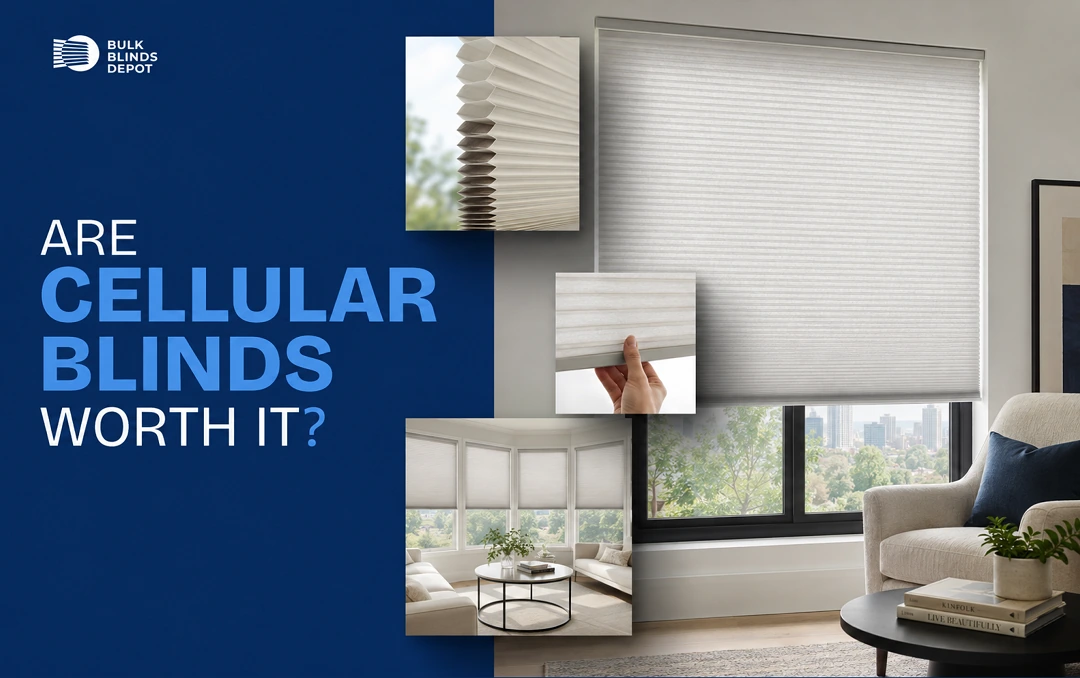
Cellular shades, also known as honeycomb shades, are window coverings crafted from a particular honeycomb cell structure that catches air in among the cells. These air pockets provide insulation, which helps maintain a comfortable temperature in your home during the winter and summer months and can also help to reduce energy consumption.
What are cellular shades made of? They are made of soft, pleated fabric that folds when they’re up and opens up into honeycomb-like pockets when they’re down, unlike traditional slatted blinds.
According to a study from the Oak Ridge National Laboratory (ORNL), cellular shades can save up to 20% on heating costs and up to 15% on cooling costs compared to having no window treatments.
Types and Comparisons of Cellular Shades You Should Know
Cellular shades don’t come in one size or variant. Instead, it has several types designed to fit various space needs. Understanding these options makes your windows and space presence more lively and efficient.
1. Single Cell vs. Double Cell Shades
Single-cell by name consists of single-cell shades made of only one layer which makes them more lightweight and affordable for bulk buying scenarios. On the other side double cell shades contain two layers which in result provides better insulation, noise reduction and more opportunity to save energy.
| Feature | Single Cell | Double Cell |
| Insulation | Good | Excellent |
| Energy Efficiency | Good | Superior |
| Noise Reduction | Moderate | Better |
| Weight | Lightweight | Slightly heavier |
| Best For | Standard windows, mild climates | Large windows, hot or cold climates |
| Price | More affordable | Higher investment |
2. Light-Filtering vs. Blackout Cellular Shades
Cellular shades come in different fabric variants, too, instead of layer functionalities. What are light filtering cellular shades known for? They are used to soften incoming sunlight and maintain privacy inside rooms.
Blackout roller shades mostly block outside light, creating a darker and more private environment for bedrooms, nurseries and media rooms.
| Type | Best For | Light Control |
| Light-Filtering | Living rooms, kitchens, offices | Softens natural light while maintaining privacy |
| Blackout | Bedrooms, nurseries, media rooms | Blocks most outside light for maximum privacy |
3. Cordless and Motorized Window Shades
The functionality or operating system you pick has implications for convenience and safety. Cordless cellular shades work by slowly raising or lowering the bottom rail, which makes them safe for kids and pets. Best for smart homes, large windows, and hard-to-reach spaces.
Motorized cellular shades are operated via remote control, smartphone app, or voice assistant, making it ideal for smart homes and executive offices.
It removes the hassle of manually rifting and handling shades throughout the day, making them an automated, innovative and modern option.
| Feature | Cordless | Motorized |
| Operation | Manual | Remote, app, or voice control |
| Child & Pet Safety | Excellent | Excellent |
| Convenience | High | Maximum |
| Best For | Most homes | Smart homes and large windows |
| Cost | Lower | Premium |
What Makes Cellular Shades an Ideal Option?
Here are some of the benefits of cellular shades as follows:
- Great insulation: Cellular shades are made with a honeycomb pattern that helps to trap air between the panels, providing insulation between the window and the room. This can minimize the amount of heat transfer that occurs through windows.
- Improved cooling in summer: Cellular shades can help block unwanted solar heat gain through windows, which can help keep rooms cooler and lessen the strain on air conditioning systems during the summer.
- Better energy efficiency all year round: Cellular shades help to retain warm air in the room in winter and prevent heat from escaping in summer, making them one of the most energy-efficient interior window coverings.
- Reducing noise: The honeycomb structure can absorb some external noise, which can make the room quieter and more comfortable, particularly in houses located by streets, schools or crowded areas.
- More privacy: Cellular shades offer privacy and various light control options. Light filtering fabrics let in natural light and blackout fabrics provide a higher level of privacy and room darkening.
- Light control: They come in a variety of light filtering, room darkening and blackout versions for living rooms, offices, bedrooms, nurseries and media rooms.
- Simple, modern look: Cellular shades offer a simple, streamlined look that is great for modern and traditional decor.
- Motorized cellular shades: Easily open and close by remote, smartphone app, or voice assistant, ideal for hard-to-reach windows, large windows and automated home energy management.
Benefits Are Surely Immense, Let’s Look at Some of the Drawbacks of Cellular Shades
Some of the disadvantages of having cellular shades are as follows:
- More difficult to clean: Honeycomb cells can trap dust, bugs, and debris, which can be harder to clean than traditional blinds or roller shades.
- Not ideal for humid areas: Most cellular shades are fabric, so moisture in bathrooms, laundry rooms or steamy kitchens can lead to staining or damage to the fabric over time.
- Limited outside view: Cellular shades tend to close so that there is no outside view. Slats do not allow for tilting open to look out while maintaining privacy, as blinds do.
- More expensive than basic blinds: Cellular shades are generally more expensive than standard mini blinds due to their insulating properties, quality of fabric, custom sizing, and the option of cordless or motorized shades.
Best Places to Use Cellular Shades and Where to Avoid Them
Cellular shades are a feasible choice for many rooms, especially where insulation, privacy, and light control are major concerns. However, they don’t necessarily mean they are the right fit for every window or space.
Where They Work Great
- Bedrooms and media rooms: Blackout cellular shades can help darken the room, which is perfect for a better night’s sleep, nursery or cinema room.
- Sunny or drafty rooms: They are honeycomb, which helps to keep the air in, reducing heat gain in summer and heat loss in winter.
- Windows with shallow mounting depth: Cellular shades are thin enough to fit in windows where other window treatments cannot be installed.
Where They Fall Short
- Bathrooms, kitchens and humid spaces: Cellular shades are typically fabric-based, so over time they can stain, mold or even damage the fabric.
- Formal rooms: Cellular shades look clean and simple, but may not be as dramatic or luxurious as Roman shades, drapes or layered window treatments.
- Very wide or uniquely shaped windows: Large windows or specialty-shaped windows may need special solutions and some cellular shades may be more difficult to use or support in wider widths.
Ways to Operate Cellular Shades
Cellular shades can be easier, safer and more convenient to use with the right control option.
- Continuous loop: This cord loop moves the shade up and down smoothly, which is ideal for larger or heavier shades.
- Cordless: A clean, child and pet-safe cordless that is operated by hand, used to raise or lower the bottom rail.
- Motorized: Controlled remotely, by smartphone app, or voice command. Ideal for hard-to-reach places, tall windows and smart-operated homes.
- Top down/bottom up: Provides the option to open the shade from the top, bottom or both, providing greater privacy and natural light control.
Key Takeaway
Cellular shades are a smart upgrade if your rooms feel too hot, too cold or just not as comfortable as they should be. Their honeycomb design helps your windows work harder by improving insulation, adding privacy, and giving your space a clean, modern finish. Whether you choose light-filtering, blackout, cordless, or motorized styles, the right cellular shades can make everyday living feel more comfortable and energy-efficient.
Still comparing options for your windows? Bulk Blinds Depot makes it easier to find clean, practical, custom-sized window treatments that fit your space without overcomplicating the process.
Frequently Asked Questions (FAQs)
What’s the difference between cellular shades and honeycomb shades?
It’s not that there’s any difference. Cellular shades and honeycomb shades are the same product. Because of their unique cell-like structure, they are called “honeycomb” and because of the fabric cells that trap the air and provide insulation for the window, they are also called “cellular.”
What are Day Night Cellular Shades?
Day night cellular shades are two fabric options combined into a single window treatment, usually a light-filtering fabric for day use and a blackout fabric for more privacy and darkness at night. They allow for flexible light control, insulation and privacy without the need for extra window treatments.
Are cellular shades good for bathrooms?
Cellular shades do not always work well in bathrooms, particularly if it is quite humid. Most cellular shades are fabric, so moisture can cause staining or damage to the fabric over time. Moisture-resistant window treatments tend to be more suitable for bathrooms.
Are cellular shades energy efficient?
Yes, cell shades are among the more energy-efficient window coverings. They are designed as a honeycomb, which helps to keep the air inside the cells, reducing heat loss in winter and heat gain in summer.
Are cellular shades out of style? No, cellular shades are not out of style. They are easy to look after, clean and simple but still effective in modern homes, offices, bedrooms and living rooms. They are not only aesthetically pleasing but also energy-efficient and offer privacy and comfort, making them a viable option for window upgrades.
Follow Us:



Kevin Salazar
Founder & Window Treatment Specialist
Kevin is a window treatment specialist with extensive experience in commercial offices, government facilities, schools, and homes. From solar shades to blackout roller shades, he’s helped hundreds of clients choose, measure, and install the right products for their space. He is the founder of Bulk Blinds Depot; his mission is simple: to make buying window treatments easy and efficient at hard-to-beat prices.