516-212-2002



October 22, 2026
Inside Mount vs. Outside Mount Blinds: Which Should You Choose?
TLDR:
Inside mount vs outside mount blinds comes down to fit first. The inside mount gives a clean, recessed look and keeps trim visible, but needs enough usable depth and a clear, obstruction-free opening. Outside mount works for shallow, uneven, or obstructed windows, offers more light and privacy coverage, and can hide damaged trim or visually enlarge a window. When both are possible, let trim visibility and light control needs decide, and always check product-specific measuring requirements before ordering.
You’ve measured the window, ordered the blind, and waited a week for it to arrive, only to find out it doesn’t actually fit. Maybe the brackets won’t clear the window handle. Maybe there’s a gap of daylight sneaking in along both edges that wasn’t there in the store photos. Or maybe the blind sits so far inside the frame that it hides the trim you specifically wanted showing. None of this is a manufacturing defect, it’s almost always the result of one decision made before the tape measure ever came out: inside mount vs outside mount blinds.
This single choice determines whether your blind can even be installed correctly, how much light leaks in around the edges, and how much of your window’s trim stays visible once it’s up. In this guide, we’ll compare how inside and outside mounts differ in fit, appearance, light and privacy control, how each one is measured, and which situations call for one over the other, so you don’t end up ordering the wrong one twice.
Inside vs Outside Mount Blinds at a Glance
| Factor | Inside Mount | Outside Mount |
| Mounting position | Inside window recess/frame | On trim or wall around opening |
| Window depth | Requires sufficient usable depth | No recess depth needed |
| Appearance | Clean, recessed, trim visible | More prominent; can cover trim |
| Light gaps | More likely at side edges | Can overlap opening to reduce gaps |
| Best for | Deep, square windows | Shallow, uneven, obstructed windows |
| Measuring | Tighter tolerances | More flexible coverage dimensions |
Global window treatments market size was $45.2 billion in 2022, projected to reach $61.9 billion by 2030, growing at a CAGR of 4.5% from 2023 to 2030
What Is an Inside Mount?
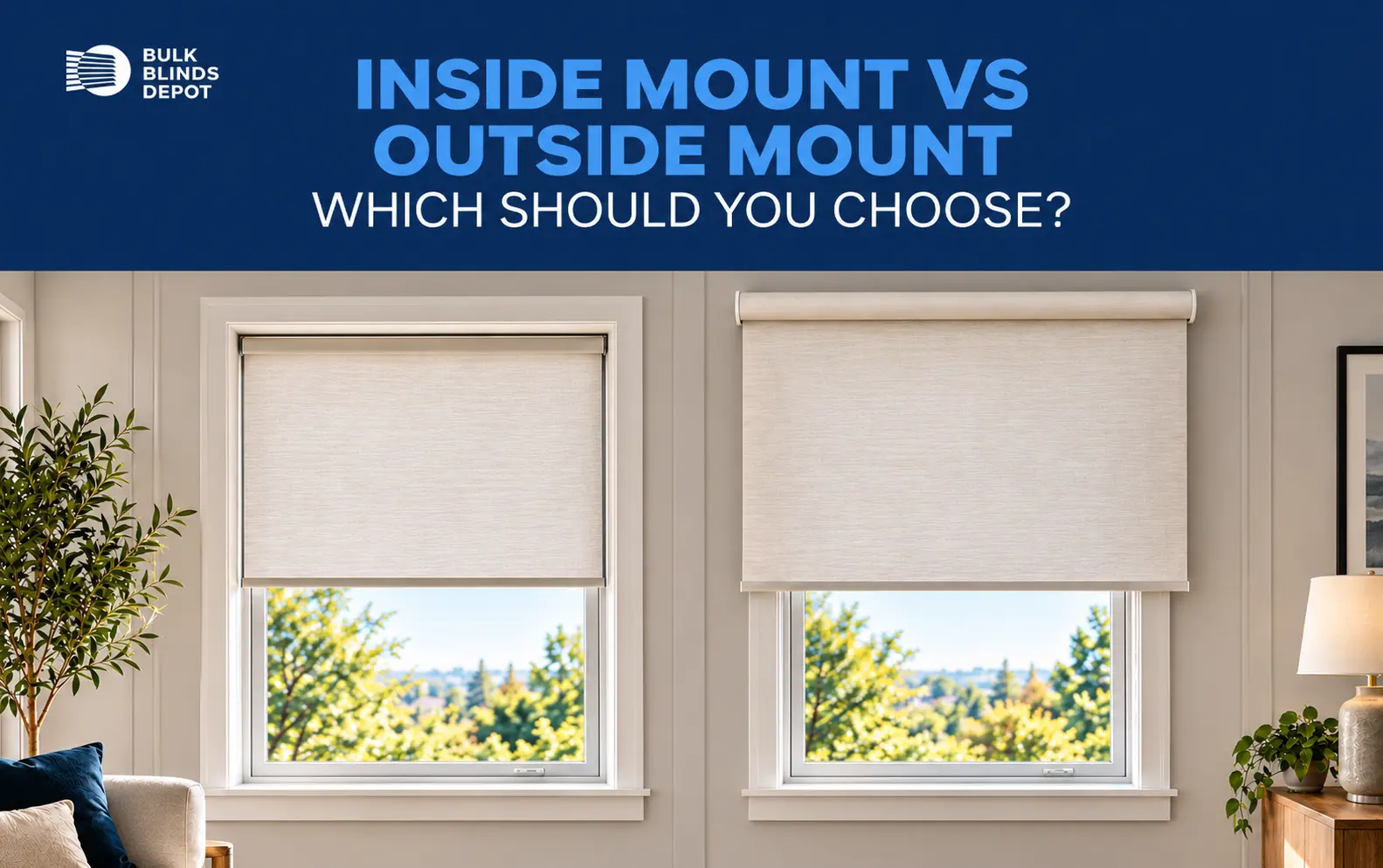
An inside mount places the brackets and headrail within the window recess or frame itself, rather than extending out onto the surrounding wall or trim. The blind sits flush with the opening, giving it a clean, built-in look.
The main benefits are aesthetic: a smaller visual footprint, decorative trim left fully visible around the blind, and a more integrated, custom-fit appearance overall.
The trade-off is that inside mounts come with real constraints. The window needs enough usable depth to fit the brackets and headrail without interference, the opening needs to be reasonably square and consistent, and there needs to be clearance from anything that could obstruct the blind, like handles, cranks, locks or alarm sensors. Required depth varies by product, so check the specific blind’s mounting requirements rather than assuming a standard window will automatically work.
What Is an Outside Mount?
An outside mount places the brackets and headrail on the wall or trim surrounding the window, rather than inside the recess. The blind hangs in front of the opening instead of fitting within it.
The main benefit is flexibility. Since the blind doesn’t depend on recess depth, it works on windows that are too shallow, uneven, or obstructed for an inside mount. It also allows the blind to extend beyond the window’s edges, which helps reduce the side light gaps that inside mounts can have and can make a window appear slightly larger.
The trade-off is appearance: an outside mount is more visually prominent and can cover some or all of the surrounding trim, depending on how far out the brackets are placed. It’s a practical solution where fit matters more than keeping trim fully exposed.
Inside Mount vs Outside Mount: Key Differences
1-Window Depth and Obstructions
This should be the first thing you check. Measure the usable depth of the opening, not just the total recess depth, and account for anything that projects into that space, handles, locks, cranks, sensors, or trim. A recess might look deep enough at a glance but still be too shallow once an obstruction is factored in.
Verdict: Use an inside mount blind only when the product fits and operates without interference. If anything gets in the way, an outside mount is the more reliable choice.
2-Light Control and Privacy
Edge gaps are normal with many inside-mounted treatments, since some clearance is needed for the blind to operate. Mounting outside the recess can add overlap at the sides and top, which often improves light blocking and privacy compared to an inside mount on the same window.
That said, mount style alone doesn’t guarantee complete blackout. Fabric opacity, product construction, and installation quality all play a role too, so don’t assume an outside mount automatically solves every light-gap issue on its own.
3-Appearance and Window Trim
Inside mount works best when the trim is attractive and the goal is a clean, recessed, minimal look that keeps the trim fully visible. Outside mount is the more practical choice for covering damaged, uneven, dated, or visually inconsistent trim, and it can also make a window appear wider or taller by extending beyond the opening.
Neither style is more premium than the other, this comes down to design preference and what the window itself calls for, not a quality difference between the two.
4-Measuring and Installation Tolerance
Inside mount requires more precise measurements, since the product has to fit within a fixed opening with little room for error. Outside mount blinds offer more freedom, since you’re choosing the exact coverage area rather than matching an exact recess, though bracket placement still needs a flat, secure mounting surface to work properly.
For exact width, height, overlap, and any factory deductions, always reference the specific product’s measuring instructions, since these details vary by blind type and manufacturer.
How to Know Which Mount Your Window Needs
- Check usable depth. Confirm the window recess has enough clear depth for your selected blind or shade, including the control system, not just the headrail itself.
- Identify obstructions. Look for cranks, handles, locks or screens that could interfere with an inside mount.
- Check the opening’s shape. Confirm the window is reasonably square and consistent in depth and width from top to bottom.
- Decide on the trim. Figure out whether you want the surrounding trim visible or covered.
- Weigh light and privacy needs. Consider how important reducing edge light gaps and maximizing privacy is for that specific room.
- Follow the exact measuring guide. Use the specific product’s measuring instructions before ordering, since width, height, and overlap requirements vary by blind type.
When Inside Mount Is the Better Choice
Inside mount tends to be the right call when:
- The window has a deep, unobstructed recess that can fully accommodate the blind and its control system.
- The trim is decorative or well-finished and worth keeping visible rather than covered.
- The room calls for a compact, built-in appearance, where a minimal visual footprint matters more than maximum light or privacy overlap.
- The opening is clear of obstructions, allowing the treatment to sit properly without sticking out beyond the window frame.
When Outside Mount Is the Better Choice
Outside mount for window shades tends to be the right call when:
- The window has a shallow recess that can’t accommodate the selected headrail or brackets.
- The window has handles, locks, cranks, or other obstructions that would interfere with an inside-mounted blind.
- The opening is uneven or out of square, making a precise inside fit difficult to achieve.
- The room is a bedroom, media space, or other privacy-focused area where the extra overlap can help reduce edge light gaps.
- The trim is damaged or unattractive, or the design goal is to make the window appear larger or taller than it actually is.
Can You Combine Inside and Outside Mount Treatments?
Yes, when the window and products allow for it. One common setup is an inside-mounted blind for everyday light and privacy control, combined with an outside-mounted treatment, such as a blind or second shade, layered over it for extra coverage or a more finished look.
Not every product combination works for every window, so check dimensions and mounting clearance for both treatments before planning a layered setup.
Inside or Outside Mount Blinds: Final Decision Guide
Choose the inside mount if the recess is deep and unobstructed, the opening is suitable, and you want the trim visible. Choose an outside mount if fit is the problem, you need more light or privacy coverage, or you want to hide or visually reshape the window opening. If both are physically possible for your window, let light control, trim visibility, and overall room design break the tie. And if your measurements are borderline either way, don’t guess, check the specific product’s mounting requirements before ordering, since getting this one decision wrong is what leads to the fit problems this guide started with.
Not sure which mount fits your window? Check the exact specs before you order, or reach out and Bulk Blinds will help you get it right the first time.
Frequently Asked Questions
Do blinds look better inside or outside the window?
Neither is objectively better, it comes down to design preference. An inside mount gives a clean, recessed, minimal look that keeps the trim fully visible, while an outside mount is more prominent and can cover or hide the trim, which works well if the trim is damaged or dated.
What type of blinds are best for outside mounting?
Most blind types can be outside mounted, including roller shades, vertical blinds, faux wood, and cellular shades. Outside-mount window shades are often chosen for shallow or obstructed windows, or when more light and privacy coverage is needed than an inside mount can provide.
Do outside mount blinds block more light?
Often, yes. An outside mount allows the blind to extend beyond the window’s edges, which can reduce the side light gaps common with inside-mounted treatments. That said, actual light blocking still depends on fabric opacity and product construction, not mount style alone.
Can I use an inside mount if my window frame is shallow?
It depends on the specific product’s depth requirements. Many blinds need a minimum usable depth to fit the brackets and headrail without interference, so a shallow frame may rule out an inside mount. Check the product’s mounting specifications before deciding.
Can outside mount blinds be installed on window trim?
Yes, outside mount brackets are typically installed directly onto the trim or wall surrounding the window, rather than inside the recess. This requires a flat, secure mounting surface, so damaged or uneven trim should be checked before installation.
How do I choose a blind mount for my window?
Knowing how to choose a blind mount type starts with checking usable depth and obstructions like handles or locks, then weighing trim visibility against light and privacy needs. If the recess is deep and clear, an inside mount usually works and if not, an outside mount is the more reliable choice
Follow Us:



Kevin Salazar
Founder & Window Treatment Specialist
Kevin is a window treatment specialist with extensive experience in commercial offices, government facilities, schools, and homes. From solar shades to blackout roller shades, he’s helped hundreds of clients choose, measure, and install the right products for their space. He is the founder of Bulk Blinds Depot; his mission is simple: to make buying window treatments easy and efficient at hard-to-beat prices.